
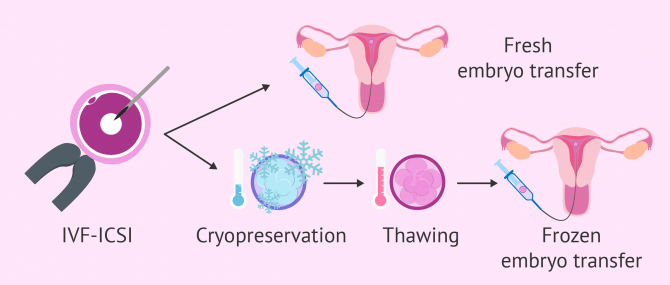
Frozen Embryo Transfer (FET) is the process by which embryos previously cryopreserved during an IVF cycle are thawed and transferred to the uterus in a subsequent cycle. FET offers couples an additional opportunity to achieve pregnancy from a single egg collection — without repeating the full stimulation process.
Why Choose FET?
FET is recommended when good-quality embryos remain following a fresh transfer, when the fresh cycle was cancelled due to OHSS or endometrial issues, or when a couple wishes to extend their family at a later date.
The FET Process
The endometrium is prepared either naturally or with hormone support. Once the lining reaches optimal thickness (typically 7mm+), the embryo is thawed, assessed for viability, and transferred under ultrasound guidance using a fine catheter. The procedure takes 15–20 minutes and requires no anaesthesia.
Embryo Survival After Thawing
In a well-equipped laboratory, 75–80% of vitrified embryos survive the thawing process — this is a laboratory figure for the freezing technique, not a pregnancy prediction. Published data indicate that pregnancy rates after a frozen transfer are broadly comparable to those after a fresh transfer, since the lining of the womb can be prepared in a calmer, unstimulated cycle. We do not publish clinic success-rate figures; your physician will discuss what is realistic for you.
Prices
Transfer only — consultation, follow-up scans, embryo thawing and the transfer itself:
- €1,795 — embryo frozen at our clinic, transferred within one year of your own IVF cycle
- €2,244 — embryo frozen at our clinic, standard pricing
- €2,444 — embryo brought from another clinic (includes organising the transport of your embryo)
We encourage you to seek independent medical advice from your own doctor before deciding on any surgical procedure.
Hormone panel, medication, hotel and transfers are not included in the transfer-only prices. FET packages with 20 nights in Istanbul (hotel in a double room, breakfast included) start at €4,540 (3-star), €5,540 (4-star) and €7,040 (5-star); each is €200 higher when the embryo comes from another clinic. Our medical fees are fixed; hotel accommodation and transfers are subject to availability and are confirmed in writing by your patient coordinator before you book. Prices last updated: October 2026. See the full price guide →
Contact UCARER Women’s Health to book your consultation with Assist. Prof. Dr. Muzaffer Uçarer.